






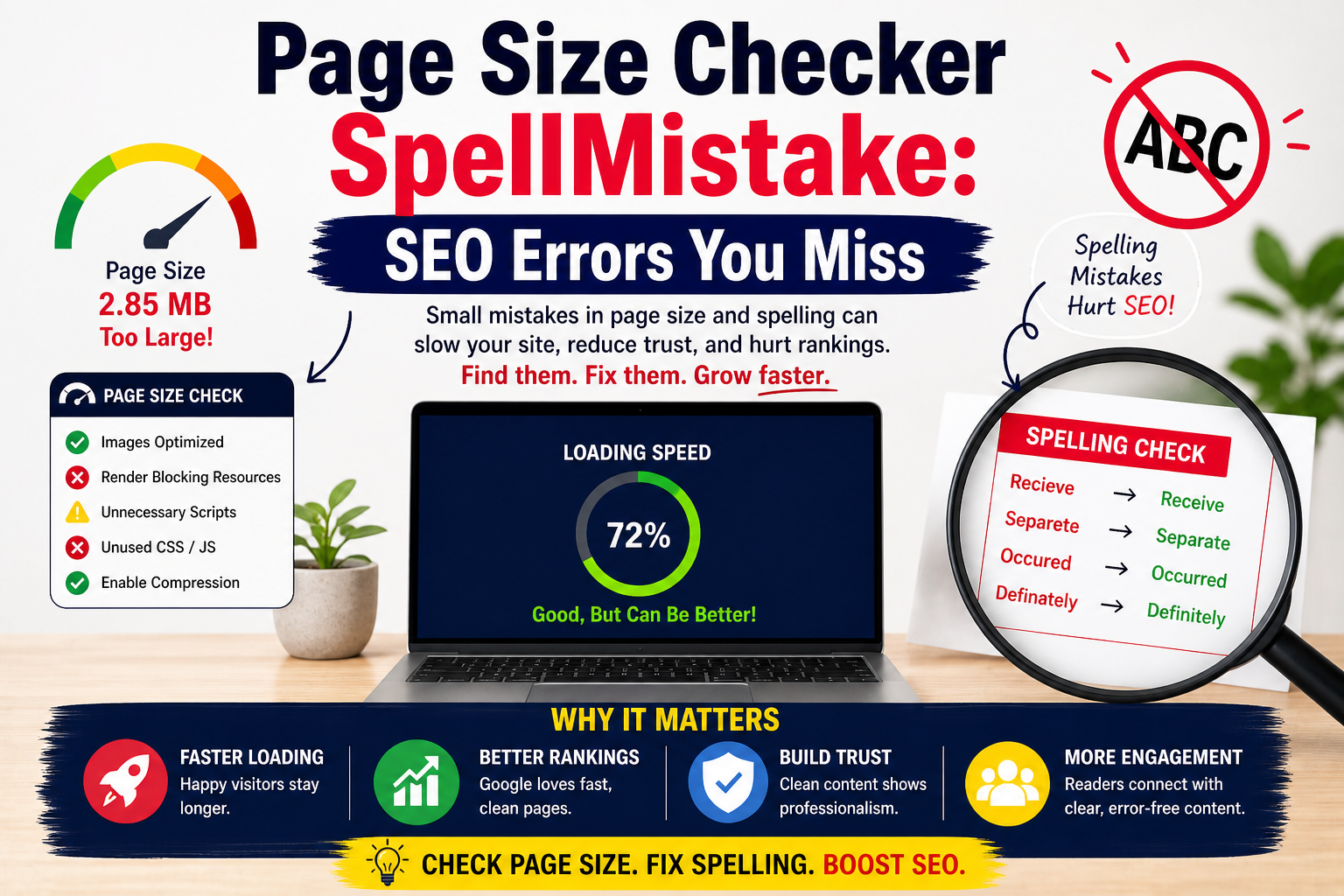
When people search for Page Size Checker SpellMistake, they are often trying to understand how webpage size affects performance or looking for tools that measure page weight, loading speed, and optimization issues.
Modern websites compete in an environment where speed influences rankings, conversions, bounce rates, and user satisfaction. A visually attractive website means little if visitors leave before the page loads.
Page size analysis has become one of the most overlooked yet important parts of technical SEO and performance optimization.
Understanding what page size means, how checking tools work, and why reducing unnecessary weight improves results can help website owners build faster, stronger, and more search-friendly websites.
This guide explores page size checking, performance metrics, SEO implications, optimization methods, and practical strategies connected with Page Size Checker SpellMistake.
What Does Page Size Mean?
Page size refers to the total amount of data required to load a webpage.
This includes:
HTML files
CSS stylesheets
JavaScript
Images
Fonts
Videos
Tracking scripts
Third-party integrations
Every element contributes to overall weight.
The larger the page, the more data browsers must download before displaying content.
Heavier pages often create slower experiences.
Why Web Page Size Matters More Than Ever
Internet users expect speed.
Studies repeatedly show that slow-loading pages increase abandonment rates.
Visitors may leave within seconds if websites appear unresponsive.
Search engines also consider performance factors.
Fast websites often provide better experiences, improving engagement signals over time.
Page speed influences:
Session duration
Conversion rates
Mobile usability
Search visibility
User satisfaction
Page size directly impacts many of these metrics.
How Page Size Affects SEO
Technical SEO extends beyond keywords and backlinks.
Performance optimization plays a growing role.
Large pages can slow crawling efficiency.
Search engine bots may process heavy websites less effectively.
Slow websites also influence behavioral signals.
If visitors leave quickly due to delays, engagement metrics decline.
Performance and SEO increasingly overlap.
Understanding Page Weight vs Page Speed
These concepts sound similar but differ.
Page weight refers to total file size.
Page speed measures loading performance.
A lightweight page often loads faster, though optimization methods also matter.
Caching, compression, server quality, and content delivery networks influence outcomes.
Reducing size usually helps but is not the only factor.
Why Images Often Cause Large Page Sizes
Images commonly represent the biggest contributor to heavy pages.
High-resolution photos improve appearance but increase loading requirements.
Uncompressed media can dramatically slow websites.
Optimization techniques include:
Image compression
Modern formats
Lazy loading
Proper sizing
Responsive images
Visual quality and performance must stay balanced.
The Role of JavaScript in Increasing Page Size
Interactive websites rely heavily on JavaScript.
Too many scripts create problems.
Large frameworks, unused code, and excessive plugins increase page weight.
Complex websites sometimes load hundreds of kilobytes or several megabytes of scripts.
Code efficiency matters.
Removing unnecessary functionality often improves speed.
Why Mobile Performance Changes Everything
Most internet traffic now comes from mobile devices.
Mobile users frequently operate on slower connections.
Heavy websites affect them more severely.
A page that feels acceptable on desktop may frustrate smartphone users.
Mobile optimization should remain a priority.
Page size reduction often improves mobile experiences significantly.
What Tools Like Page Size Checkers Actually Measure
When searching Page Size Checker SpellMistake, users often expect a tool showing webpage weight.
Most page analysis tools evaluate:
Total page size
Resource count
Load requests
Script weight
Image size
CSS files
Performance indicators
Some also provide optimization recommendations.
These insights help identify bottlenecks.
Why Third-Party Scripts Slow Websites
External services increase functionality.
Examples include:
Analytics tools
Chat widgets
Advertising scripts
Social media embeds
Tracking systems
Every additional script increases requests.
Too many integrations often harm performance.
Balancing usefulness with speed becomes important.
The Connection Between Page Size and Core Web Vitals
Core Web Vitals gained importance in website optimization discussions.
These metrics evaluate user experience through factors including responsiveness and loading performance.
Heavy pages can negatively influence these measurements.
Performance improvements sometimes support stronger scores.
Technical SEO increasingly includes user experience evaluation.
How Compression Improves Website Performance
Compression reduces transferred data size.
Popular methods include Gzip and Brotli compression.
Smaller transferred files load faster.
Many websites fail to implement compression effectively.
Simple adjustments sometimes create noticeable improvements.
Optimization does not always require redesigns.
Why Hosting Quality Matters
Page size is important, but hosting influences outcomes too.
Slow servers increase delays.
Poor infrastructure reduces performance potential.
Even optimized pages may struggle on weak hosting environments.
Reliable hosting supports faster delivery.
Performance depends on multiple layers.
Common Mistakes Website Owners Make
Many website owners unknowingly create performance issues.
Frequent mistakes include:
Uploading oversized images
Installing excessive plugins
Ignoring caching
Using heavy themes
Embedding too many external tools
Neglecting code cleanup
Small inefficiencies accumulate over time.
Why E-Commerce Sites Often Have Larger Pages
Online stores naturally include more resources.
Product images, reviews, scripts, recommendation systems, and payment integrations increase complexity.
Balancing functionality with performance becomes challenging.
Optimization matters greatly for conversion-focused websites.
Even minor speed improvements can affect revenue.
How Content Management Systems Influence Page Size
Platforms such as WordPress simplify website creation.
Convenience sometimes increases bloat.
Themes and plugins may load unnecessary assets.
Regular auditing helps identify inefficiencies.
Performance optimization should remain ongoing rather than one-time work.
Understanding Requests vs File Size
Page size alone does not determine speed.
Number of server requests matters too.
Many small files can create delays.
Optimization often involves reducing both total size and request count.
Efficiency comes from balance.
Why Developers Monitor Performance Continuously
Websites evolve constantly.
New features, plugins, and updates affect speed.
Regular monitoring prevents gradual deterioration.
Performance checks help maintain stability.
Ignoring optimization eventually compounds issues.
How Search Intent Relates to Page Size Analysis
Someone searching Page Size Checker SpellMistake may have different goals.
They may want:
Faster SEO performance
Better user experience
Improved rankings
Reduced bounce rates
Technical troubleshooting
Website audits
Understanding intent helps provide more useful solutions.
The Relationship Between UX and Speed
User experience extends beyond design.
Speed shapes perception.
Fast websites often feel more trustworthy and professional.
Delays create frustration.
Performance optimization improves usability indirectly.
Users rarely praise speed, but they notice slowness immediately.
Why Compression of Images Matters More Than Resolution Alone
High resolution does not automatically mean better results.
Oversized images waste resources.
Compression maintains quality while reducing size.
Modern optimization tools help preserve visual appearance efficiently.
Smart compression supports performance goals.
The Growing Importance of Technical SEO
SEO has evolved.
Ranking improvements increasingly involve technical quality alongside content.
Site architecture, crawlability, mobile usability, and speed matter more than before.
Performance optimization strengthens overall website health.
Technical improvements often support long-term growth.
How Page Size Influences Bounce Rate
Visitors expect instant access.
Slow pages increase abandonment probability.
Higher bounce rates may reduce engagement opportunities.
Reducing page size can improve retention indirectly.
User patience remains limited.
First impressions happen quickly.
Why Website Audits Should Include Page Size Reviews
Comprehensive audits examine multiple factors.
Page weight deserves attention alongside:
Metadata
Internal linking
Structured data
Crawl issues
Mobile usability
Performance metrics
Optimization works best holistically.
Practical Ways to Reduce Heavy Pages
Improvement often starts with simple actions.
Compress images.
Remove unused scripts.
Minify CSS.
Enable caching.
Use modern formats.
Review plugins.
Small adjustments collectively create meaningful differences.
Why Businesses Care About Faster Websites
Speed affects outcomes beyond rankings.
Faster sites may improve:
Lead generation
Sales
Engagement
User trust
Customer retention
Performance optimization often supports broader business goals.
Understanding the Bigger Picture Behind Page Size Checker SpellMistake
The phrase Page Size Checker SpellMistake may initially seem related only to measurement tools, but the underlying topic reaches much further.
Page size connects with SEO, user experience, website performance, mobile usability, and conversion optimization.
Checking size without understanding impact limits improvement potential.
Real value comes from interpretation and action.
Future Trends in Website Performance Optimization
Web standards continue evolving.
Users expect faster experiences.
Search engines increasingly reward quality.
Optimization methods will likely focus more on efficiency, intelligent loading, and improved mobile delivery.
Performance will remain competitive advantage.
Final Thoughts on Page Size Checker SpellMistake
Understanding Page Size Checker SpellMistake involves more than measuring webpage weight.
It means recognizing how page size influences SEO, user satisfaction, loading speed, engagement, and business performance.
Smaller, optimized pages often provide smoother experiences and stronger technical foundations.
Whether managing blogs, e-commerce stores, portfolios, or company websites, monitoring page size remains an important part of long-term digital success.
Performance improvements rarely come from one change alone.
Consistent optimization usually creates the biggest results over time.