





Getting interview attire for women right comes down to one principle that cuts through most of the confusion: match the formality of the room, not just the industry name. A tech startup and a tech consulting firm can have completely different dress codes despite sitting in the same sector, and reading that difference correctly matters more than any single outfit rule.
I’ve reviewed resumes and sat in on hiring panels, and the candidates who stood out for the wrong reasons were rarely underdressed. They were usually wearing something clearly uncomfortable, distracting, or picked the night before without trying it on properly. Good interview attire for women isn’t about following a rigid formula, it’s about looking put-together and feeling confident enough to focus entirely on the conversation.
What Counts as Professional Interview Dress
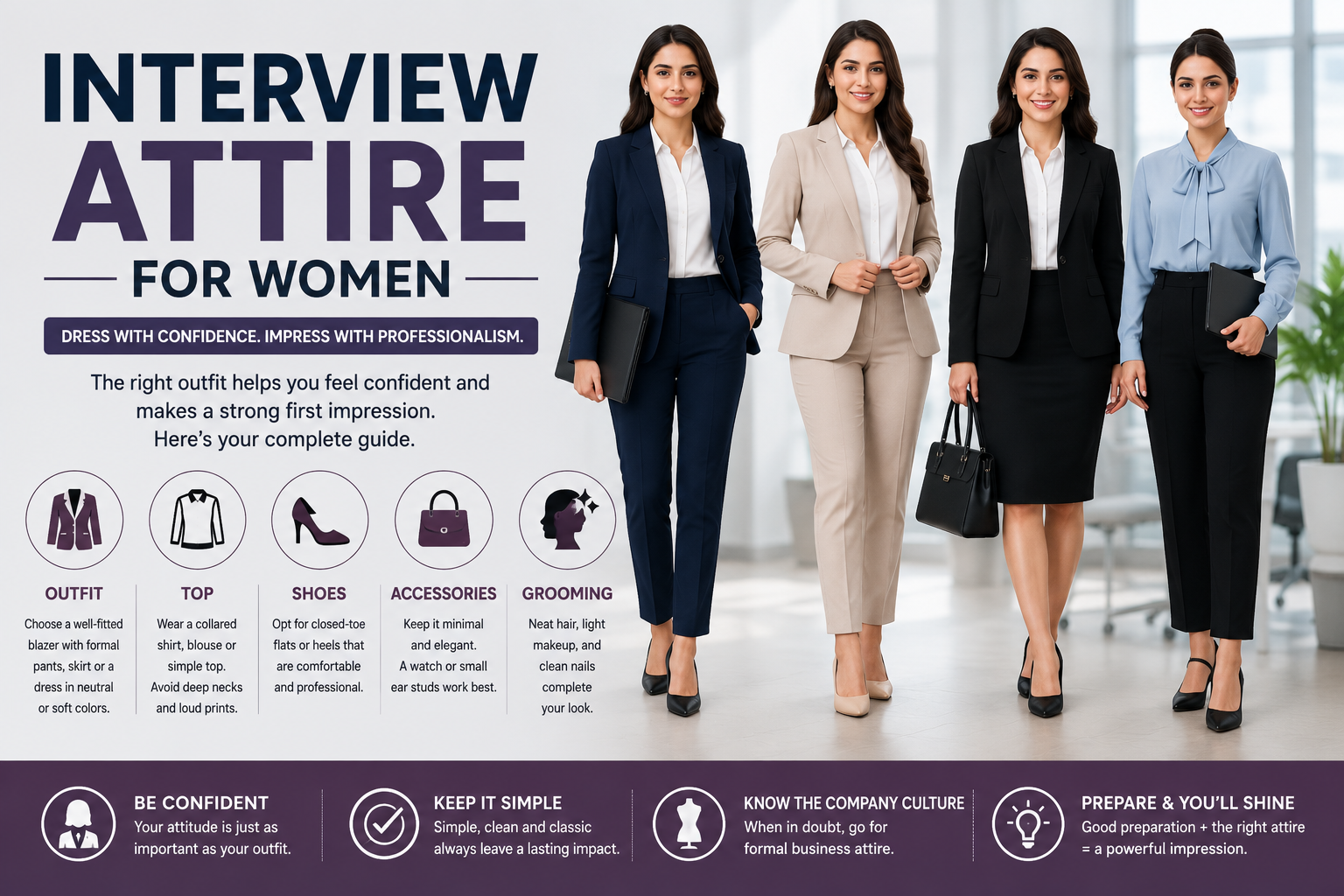
A tailored blazer, a knee-length or midi skirt or dress pants, and closed-toe shoes form the safest baseline for interview attire for women across most industries. Neutral colors like navy, black, charcoal, and soft gray photograph well on video calls and read as put-together without looking like a uniform.
The fit matters more than the price tag. A well-tailored $80 blazer looks sharper than an ill-fitting $300 one, and most alteration shops charge $20 to $40 to take in the waist or shorten the sleeves. If you only invest in tailoring one piece of your interview wardrobe, make it the blazer, since it’s the piece most visible on camera and in person.
Interview Dress for Women: When a Dress Works Better Than a Suit
An interview dress for women works well in creative industries, education, healthcare, and many mid-sized corporate offices, as long as the length sits at or below the knee and the fit isn’t overly fitted or loose. Sheath dresses in solid colors are the most versatile option, since they layer easily under a blazer for more formal settings or stand alone for business casual ones.
Avoid anything sleeveless for interviews unless you’re planning to keep a blazer or cardigan on throughout, since bare shoulders read as more casual than most interview settings call for. A wrap dress or A-line silhouette in a solid, muted color is a dependable choice that works across body types and doesn’t require much styling knowledge to get right.
Building a Women’s Interview Outfit From the Ground Up
A strong women interview outfit starts with the base layer, not the jacket. A well-fitted blouse or fine-knit top in a solid color or subtle pattern gives you flexibility to add or remove a blazer depending on the room’s formality once you arrive.
Pair it with tailored trousers or a pencil skirt, and closed-toe flats or low-to-mid heels rather than anything with a heel over three inches, since comfort affects how you carry yourself in the room. Jewelry should be minimal and quiet, nothing that clinks or catches light distractingly during a handshake or when gesturing while speaking.
A structured tote or portfolio bag completes the look and doubles as somewhere to keep resume copies and notes organized rather than shuffling through a purse mid-interview.
Interview Clothing for Women in Different Industries
Interview clothing for women shifts meaningfully depending on the field, and treating every interview identically is a common misstep. Finance, law, and corporate management still lean toward full suits or tailored dress-and-blazer combinations nearly always.
Tech, marketing, and startup interviews generally allow more relaxed pieces like tailored trousers with a blouse, skipping the blazer entirely if the company culture is visibly casual on their website or social media. Healthcare and education interviews usually sit in the business casual range, polished but not as formal as a full suit.
Creative fields like design, media, and fashion itself allow more personal style and color, but the fit and grooming standards still matter as much as in more conservative industries.
What Not to Wear to a Women’s Interview
Skip anything with visible wrinkles, strong perfume, or heavy jewelry that makes noise, since small interview rooms amplify all three in ways that distract from the actual conversation. Avoid overly short hemlines, low necklines, or anything that requires frequent readjusting, since comfort directly affects how confident you come across.
Bright, bold prints and neon colors can work in genuinely creative industries but are safer left at home for finance, law, and corporate interviews. Fresh, ironed, well-fitted clothing in muted colors consistently reads as more prepared than an expensive outfit that’s wrinkled or doesn’t quite fit right.
Interview Attire for Women on Video Calls
The same interview attire for women rules apply on camera, with one adjustment: solid colors and simple patterns show up better on webcams than fine stripes or small prints, which can create a flickering moiré effect on lower-quality cameras. Stay dressed professionally below the frame too, since standing up unexpectedly mid-call happens more often than people plan for.
Lighting affects how an outfit reads on screen almost as much as the outfit itself. A neutral-colored top against a plain background photographs more professionally than a busy pattern in a cluttered room, so check your camera setup and lighting the evening before rather than minutes prior.
Frequently Asked Questions
Is a suit necessary for interview attire for women, or is a dress acceptable?
A tailored dress with or without a blazer is acceptable for most industries. Full suits are safer for finance, law, and corporate roles, while creative and healthcare fields generally allow a well-fitted dress or trouser-blouse combination.
What length should an interview dress be?
At or just below the knee is the safest length across nearly every industry. Anything significantly shorter reads as more casual than most interview settings expect, regardless of how formal the rest of the outfit is.
Can I wear pants instead of a skirt or dress to an interview?
Yes. Tailored trousers paired with a blazer or blouse are fully appropriate across almost all industries and often more practical than a skirt for sitting comfortably through a longer interview.
How much heel height is appropriate for interview shoes?
Low to mid heels under three inches, or flats, work best. Comfort affects posture and confidence throughout the interview, and anything higher risks distracting from how you present yourself.
Does interview attire for women change for video interviews?
Mostly the same rules apply, but solid colors read better on camera than fine patterns, which can distort on lower-quality webcams. Dress fully professional below the frame as well, in case you need to stand up unexpectedly.
What’s the most common mistake women make with interview outfits?
Discomfort, not lack of formality. An outfit that requires constant readjusting, like a hem that’s too short or heels that pinch, distracts from confidence more than choosing a slightly less formal but comfortable option.
One Thing Worth Doing the Night Before
Sit down in the full outfit for at least ten minutes before the interview, not just try it on standing in front of a mirror. Skirts ride up, blazers pull at the shoulders, and shoes that feel fine walking around the store can pinch after sitting through a thirty-minute conversation, and catching that the night before beats adjusting your outfit mid-interview.