






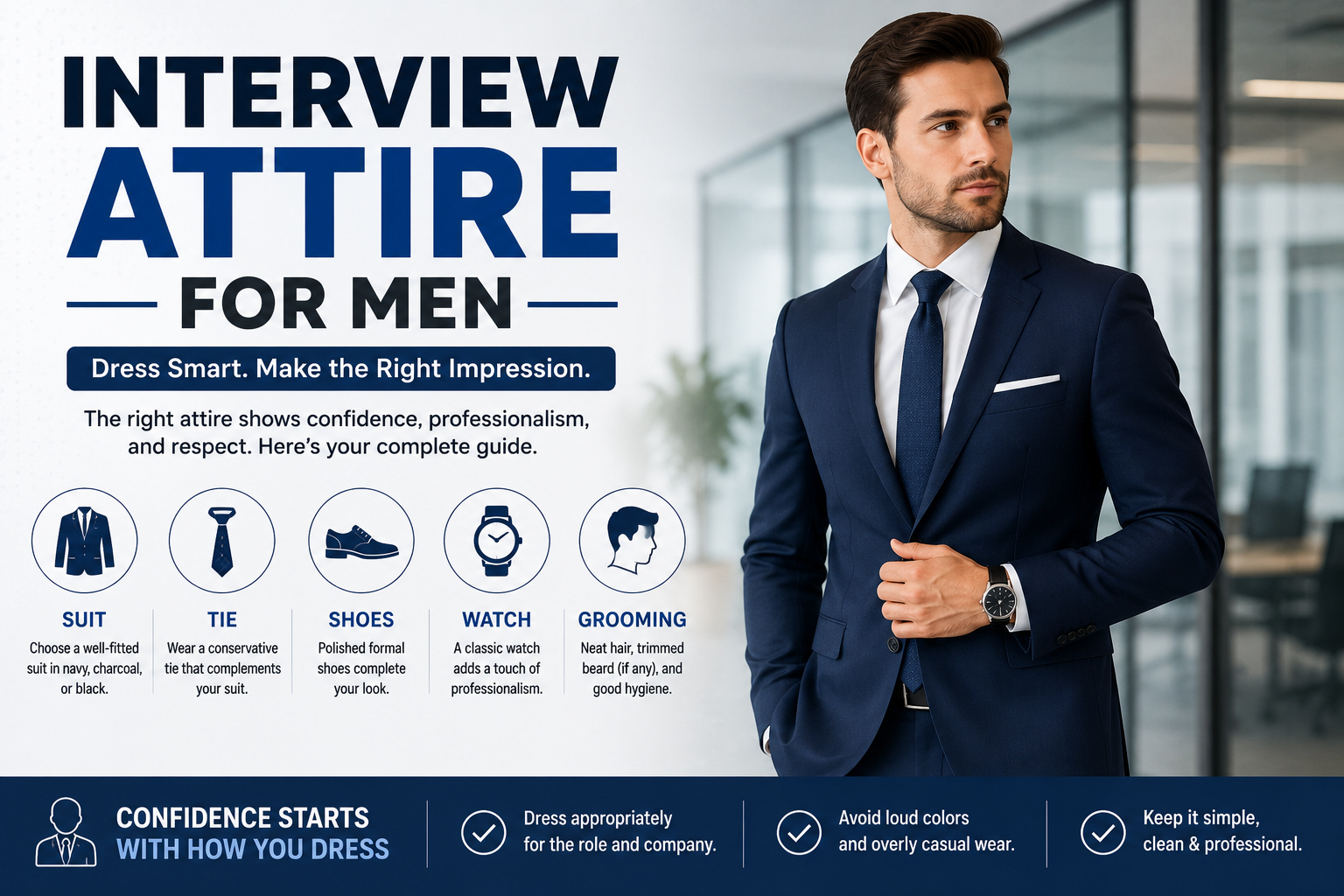
Getting interview attire for men right comes down to one rule most guides overcomplicate: dress one level above what the company’s daily employees wear, and never below business casual unless you’ve confirmed the office is genuinely casual. That single rule solves most of the confusion, and the rest is detail work this guide covers section by section.
I’ve sat on both sides of the interview table, and the outfits that actually hurt candidates were never “too formal.” They were mismatched, wrinkled, or clearly borrowed for the day. Getting interview attire for men right isn’t about owning an expensive wardrobe, it’s about fit, cleanliness, and matching the room.
When a Full Suit Is the Right Call
A full suit is the safest choice for finance, law, consulting, corporate management, and any role where you’re unsure of the dress code. Navy or charcoal are the two colors that photograph well on video calls and read as professional in person without looking like a costume. This is one of the more traditional forms of interview attire for men, and it rarely goes wrong when the industry leans formal.
The suit should fit at the shoulders above everything else, since shoulder seams can’t be altered cheaply but sleeve and waist length can. A $200 suit that fits well outperforms a $600 suit that doesn’t, and most tailoring shops charge $30 to $60 for a proper hem and taper.
If you’re unsure whether a role needs a full suit, check the company’s LinkedIn photos or ask the recruiter directly. Overdressing by one level is always safer than underdressing, and nobody has ever lost a job offer for wearing a suit to a business casual interview.
What to Wear When It’s Not a Suit Job
For business casual and startup environments, the right interview attire for men centers on a button-up shirt, dress pants or dark chinos, and leather shoes. Skip the tie in these settings, since it can read as overdressed for a company culture that’s deliberately informal.
A button-down shirt in white, light blue, or a subtle pattern works across nearly every industry. Avoid loud prints, graphic logos, or anything with visible wrinkles straight out of the dryer, since a wrinkled shirt is the single most common styling mistake candidates make without realizing it.
Tech and creative fields can skip the blazer entirely if the office culture is casual, but a blazer over a button-up still works as a flexible middle ground if you’re not certain how formal to go. It’s easy to remove in the waiting room if the office turns out to be more relaxed than expected.
Suit and Shirt Details That Actually Matter
Good interview attire for men should be worn with a belt matching your shoe color, dark socks that cover your ankle when seated, and a tie that stops right at your belt buckle if you’re wearing one. These small details are what separate a polished look from one that just looks like the right pieces thrown together.
Solid or subtly patterned ties in navy, burgundy, or gray work across nearly every industry. Save bold colors and novelty patterns for after you’ve gotten the job and understand the office culture better.
Watch stitching and hem length before the interview, not the morning of. Pants should break slightly at the shoe, not pool at the ankle, and jacket sleeves should show about half an inch of shirt cuff when your arms hang naturally.
What Not to Wear to an Interview
Knowing what not to wear matters as much as knowing what to wear. Skip sneakers unless you’ve confirmed the office is genuinely casual, skip strong cologne since interview rooms are often small and enclosed, and skip anything with visible logos or slogans regardless of the industry.
Backpacks are fine for carrying materials, but bring a portfolio or simple bag to actually carry into the interview room itself. Wrinkled clothing pulled straight from a suitcase or laundry basket damages a first impression more than a slightly less formal outfit that’s clean and well-fitted.
Strong colognes and heavy hair product are worth dialing back specifically for interviews, since a small conference room amplifies scent in a way that can distract from the conversation rather than help it.
Interview Attire for Men by Industry
The right interview attire for men really depends on the field, and treating every interview the same is where a lot of candidates go wrong. Finance and law lean toward full suits nearly always. Tech and startups lean toward button-ups and chinos, sometimes without a jacket at all.
Creative fields like design and marketing allow more personality in color and accessories, but the fit and cleanliness rules still apply regardless of industry. Healthcare and education interviews generally sit in the business casual range, a step below a full suit but noticeably more polished than jeans and a t-shirt.
When genuinely unsure, business casual with a blazer is the safest universal default across almost every industry, since it can flex up or down depending on the room.
Virtual Interview Attire for Men
Virtual interview attire for men follows the same rules as in person, with one addition: solid colors read better on camera than fine patterns, which can create a distracting moiré effect on lower-quality webcams. Stick to the top half being interview-ready even if you’re wearing sweatpants below frame, since standing up unexpectedly happens more often than people plan for.
Camera positioning and lighting matter almost as much as the outfit itself. A well-lit face in an ill-fitting shirt still reads better on screen than a great suit shot from a bad angle in dim lighting, so check your camera setup the night before, not five minutes prior.
Frequently Asked Questions
Is a suit always necessary for interview attire for men?
No. Full suits make sense for finance, law, and corporate roles, but business casual with a button-up and dress pants works for most tech, startup, and creative industry interviews. When in doubt, a blazer over a button-up is a safe middle ground.
What color suit is best for a job interview?
Navy and charcoal are the safest choices across nearly every industry. Both photograph well on video calls and read as professional without appearing overly formal or costume-like in person.
Should I wear a tie to a business casual interview?
Generally no. A tie can read as overdressed in a genuinely business casual office. Skip it unless the company culture leans more formal, which you can usually confirm from LinkedIn photos or by asking the recruiter directly.
What’s the biggest interview outfit mistake men make?
Wrinkled clothing, not underdressing. A slightly less formal outfit that’s clean and well-fitted almost always makes a better impression than a formal outfit pulled straight from a suitcase or laundry basket.
Do interview outfit rules change for video interviews?
Mostly no, but solid colors work better on camera than fine patterns, which can distort on lower-quality webcams. Also dress fully professional even below the frame, since standing up unexpectedly happens more often than people expect.
How much should I spend on an interview suit?
A well-fitted $200 suit outperforms a poorly fitted $600 suit. Tailoring alterations typically cost $30 to $60 and matter more for a polished appearance than the original price tag of the suit itself.
One Thing Worth Doing the Night Before
Try on the full outfit under the same lighting you’ll actually be interviewed in, whether that’s your bathroom mirror before an in-person interview or your laptop camera before a video call. Clothes that look fine under overhead store lighting can look completely different under fluorescent office lighting or a webcam’s white balance, and catching that mismatch the night before beats noticing it in the waiting room.


Interview Attire for Women: Complete 2026 Guide
July 22, 2026[…] Interview Attire for Men: The Complete 2026 Guide… […]